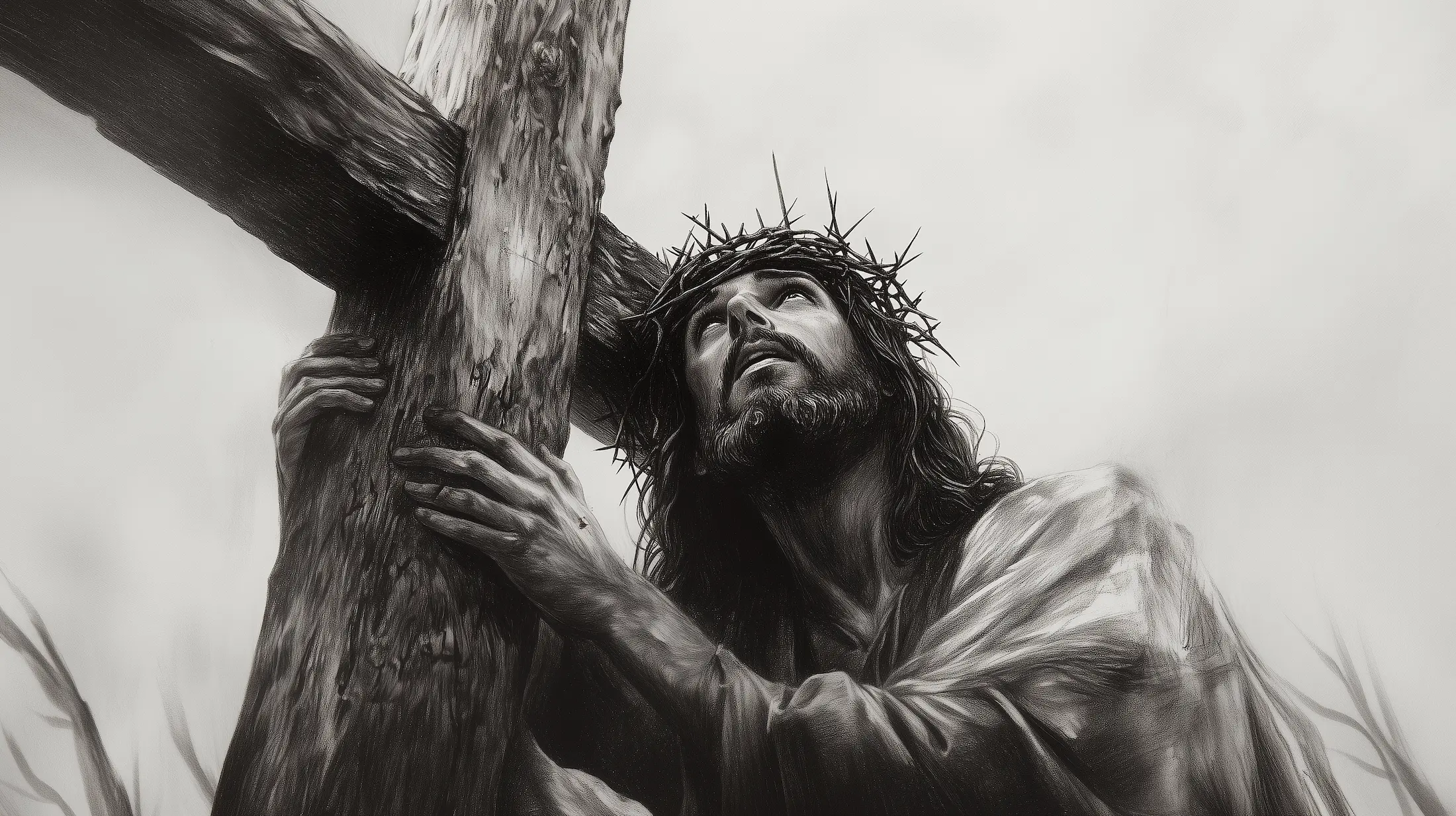
Dyed Garments From Bozrah
The book of Isaiah presents a curious vision that points directly to Jesus Christ. It begins with a question:
“Who is this that cometh from Edom, with dyed garments from Bozrah? this that is glorious in his apparel, travelling in the greatness of his strength?”
To which the Lord Himself replies:
“I that speak in righteousness, mighty to save.”
— Isaiah 63:1 (KJV)
Another question follows:
“Wherefore art thou red in thine apparel, and thy garments like him that treadeth in the winefat?”
And again, the Lord responds:
“I have trodden the winepress alone; and of the people there was none with me: for I will tread them in mine anger, and trample them in my fury; and their blood shall be sprinkled upon my garments, and I will stain all my raiment.”
— Isaiah 63:2-3 (KJV)
These vivid images invite us to explore the rich symbolism within this passage: the significance of Edom, the meaning behind Christ’s garments stained red, the solitary winepress He trod, and the implications of His righteous fury.
The Wine of God’s Wrath
In the narrative of redemption, Jesus Christ stands alone as the one who bore the full measure of God’s wrath against sin. He drank the bitter cup, absorbing the righteous indignation of a holy God, so that we might be spared. His blood alone was shed for the remission of sins, and in His darkest hour, there was no one to drink this fury with him. He trod the winepress alone – this was the winepress of God’s wrath against sin, and it was Christ’s own blood that first stained his garments red.
In this prophecy of Isaiah, Edom symbolizes the guilty world—a world that has spurned the gospel and rejected the cleansing power of Christ’s blood, choosing instead to persist in wickedness. Isaiah continues:
“For the day of vengeance is in mine heart, and the year of my redeemed is come.”
— Isaiah 63:4 (KJV)
A day is approaching when the Lord will enact justice upon those who have refused His gracious offer of salvation. Christ Himself is the executor of this divine judgment:
“For as the Father hath life in himself; so hath he given to the Son to have life in himself; And hath given him authority to execute judgment also, because he is the Son of man.”
— John 5:26-27 (KJV)
It is profoundly significant that Christ is entrusted with this role. He alone experienced the full weight of divine judgment on behalf of humanity when He suffered on the cross. He trod the winepress of God’s wrath alone; no man or angel stood with Him to remove the sense of suffering from him. This solitary act reveals the magnitude of His sacrifice and the depth of His love for the human race.
Vengeance Belongs to the Lord
In our human frailty, when we are wronged, we often grapple with the desire for retribution. The impulse to make others feel the pain they have inflicted upon us is strong. However, Scripture admonishes us to relinquish this desire for personal vengeance:
“To me belongeth vengeance, and recompence.”
— Deuteronomy 32:35 (KJV)
The apostle Paul reiterates this divine principle:
“Dearly beloved, avenge not yourselves, but rather give place unto wrath: for it is written, Vengeance is mine; I will repay, saith the Lord.”
— Romans 12:19 (KJV)
But why is Jesus uniquely appointed to execute justice upon those who reject His mercy? Because He alone provided the means of pardon through His sacrificial death. He endured the full measure of God’s wrath on humanity’s behalf, standing solitary in His suffering. No one was there to assist or uphold Him.
Isaiah captures this reality:
“And I looked, and there was none to help; and I wondered that there was none to uphold: therefore mine own arm brought salvation unto me; and my fury, it upheld me.”
— Isaiah 63:5 (KJV)
This passage brings us back to the heart of the atonement. Christ bore the weight of sin alone; there was no intercessor for Him as He became the mediator for us. What sustained Him through this unimaginable ordeal? It was His own arm—symbolizing His power and might—and His righteous fury against sin. His perfect righteousness fueled His resolve; His holy indignation against sin upheld Him.
Christ’s Perfect Righteousness and Fury Against Sin
Jesus endured the anguish that every guilty sinner would face without an intercessor between themselves and a holy God. Isaiah describes the vision of Jesus during this time:
“And he saw that there was no man, and wondered that there was no intercessor: therefore his arm brought salvation unto him; and his righteousness, it sustained him.”
— Isaiah 59:16 (KJV)
It was Christ’s own righteousness that sustained Him amidst the torment of retributive justice. As the spotless Lamb of God, He was the unblemished sacrifice, carrying the sins of the world upon Himself. His righteousness and His wrath against sin are intrinsically linked. Only perfect righteousness can possess a perfect hatred for sin.
Consider the paradox faced by God the Father—administering justice upon His own beloved Son. Yet, it was this very righteousness, demanding justice against sin, that upheld Jesus on the cross. The same divine power that inflicted the penalty for sin also empowered Him to bear it. This is because God, although turning his face away from His Son, suffered with him in that hour of darkness. The power of divine justice of both the Son and the Father, displayed in the perfect life of Christ, and suffered by the divine-human substitute.
Ellen G. White observes:
“The power that inflicted retributive justice upon man’s substitute and surety, was the power that sustained and upheld the suffering One under the tremendous weight of wrath that would have fallen upon a sinful world.”
— Manuscript 35, 1895 (7ABC 463.3)
The Agony of Christ’s Suffering
The intensity of Christ’s suffering was magnified by His absolute perfection. Ellen White elaborates:
“The suffering of Christ was in correspondence with His spotless purity; His depth of agony, proportionate to the dignity and grandeur of His character.”
— 7ABC 473.1
“Christ could not have done this work had He not been personally spotless. Only One who was Himself perfection could be at once the sin bearer and the sin pardoner. He stands before the congregation of His redeemed as their sin-burdened, sin-stained surety, but it is their sins He is bearing.” 7ABC 461.4
“Justice demanded the sufferings of a man. Christ, equal with God, gave the sufferings of a God. He needed no atonement. His suffering was not for any sin He had committed; it was for man –all for man; and His free pardon is accessible to all. The suffering of Christ was in correspondence with His spotless purity; His depth of agony, proportionate to the dignity and grandeur of His character. Never can we comprehend the intense anguish of the spotless Lamb of God, until we realize how deep is the pit from which we have been rescued, how grievous is the sin of which mankind is guilty, and by faith grasp the full and entire pardon.” 7ABC 473.1
Notice this interesting thought:
“The suffering of Christ was in correspondence with His spotless purity”.
It was his perfection that made his suffering greater.
“What a wonderful interest God must have had in humanity when in their behalf He gave His only begotten Son to a life of suffering in order that He might work out the salvation of the human race! The Prince of heaven was given as a sacrifice, and He had a capacity for suffering proportionate to His high and holy purity.” 13LtMs, Ms 57, 1898, par. 13
“The nature of Christ had a greater capacity for suffering; for the human existed in the Divine nature, and created a capacity for suffering to endure that which resulted from the sins of a lost world. The agony which Christ endured, broadens, deepens, and gives a more extended conception of the character of sin, and of the retribution which God will bring upon those who continue in sin.” BTS September 1, 1915, par. 7
Because He was sinless, the weight of the world’s sin was an incomprehensible burden. The accumulated guilt and depravity of humanity pressed upon Him with overwhelming force. In that moment, He felt the full measure of God’s wrath—the penalty that sin incurs. Enveloped in profound darkness, both physical and spiritual, He experienced a separation from the Father unlike any before. This led to His heart-rending cry from the cross:
“My God, my God, why hast thou forsaken me?”
— Matthew 27:46 (KJV)
This cry reflects the depths of His anguish as He bore our sins, feeling the estrangement – to its full extent – that sin causes between God and those that will cling to sin.
The Day of Vengeance
The concept of the “day of vengeance” was in Christ’s heart. Not only did He personally endure its fury on the cross, but He also anticipated the future outpouring of God’s wrath upon unrepentant sinners—a necessary act to eradicate sin forever. Edom, along with Bozrah and Mount Seir, serves as symbolic representations of the wicked world that stands in opposition to God at the time of His return.
Isaiah portrays this impending judgment:
“For my sword shall be bathed in heaven: behold, it shall come down upon Idumea, and upon the people of my curse, to judgment.”
— Isaiah 34:5 (KJV)
This imagery highlights the seriousness of divine justice and the certainty of God’s righteous judgment against sin.
Lessons from Esau and Edom
Edom, derived from Esau’s lineage, became an allegory in Scripture for the rejectors of God’s mercy. Esau infamously traded his birthright—the privileges and blessings of the firstborn—for a mere bowl of red stew. This act epitomizes the tragic choice of valuing immediate, fleeting gratification over enduring spiritual inheritance. The apostle Paul cautions us:
“Lest there be any fornicator, or profane person, as Esau, who for one morsel of meat sold his birthright.”
— Hebrews 12:16 (KJV)
What lesson does this teach us? What is the birthright given to us?
“There are very many who are like Esau. He represents a class who have a special, valuable blessing within their reach,—the immortal inheritance, life that is as enduring as the life of God, the Creator of the universe, happiness immeasurable, and an eternal weight of glory,—but who have so long indulged their appetites, passions, and inclinations, that their power to discern and appreciate the value of eternal things is weakened.” CD 148.1
Esau represents those who seek the benefits of God’s blessings without embracing God Himself. They desire the gifts but reject the Giver. This serves as a sobering warning to us: to cherish and hold fast to the priceless birthright of eternal life offered through Jesus Christ, rather than forfeiting it for the temporary pleasures of this world.
Conclusion: Christ, Mighty to Save
The prophet Isaiah poses the question:
“Who is this that cometh from Edom, with dyed garments from Bozrah? this that is glorious in his apparel, travelling in the greatness of his strength?”
And the answer resounds:
“I that speak in righteousness, mighty to save.”
— Isaiah 63:1 (KJV)
Jesus Christ is indeed mighty to save all who turn to Him in faith. His garments, stained with His own precious blood, reveal the sacrifice He made to cleanse us from sin. John, in the Revelation saw Jesus:
“And I saw heaven opened, and behold a white horse; and he that sat upon him was called Faithful and True, and in righteousness he doth judge and make war. And he was clothed with a vesture dipped in blood: and his name is called The Word of God.”
— Revelation 19:11, 13 (KJV)
While his own vesture is dipped in his own precious blood, he offers us garments of lined clean and white in exchange. Through His atoning death and victorious resurrection, He has broken the power of sin and offers us the grace to live in righteousness. All that is required of us is to surrender our wills to Him, to accept His gift of salvation, and to stand firm against sin in His name.